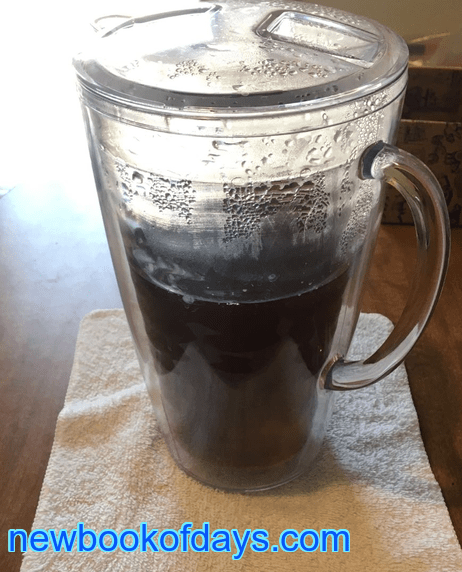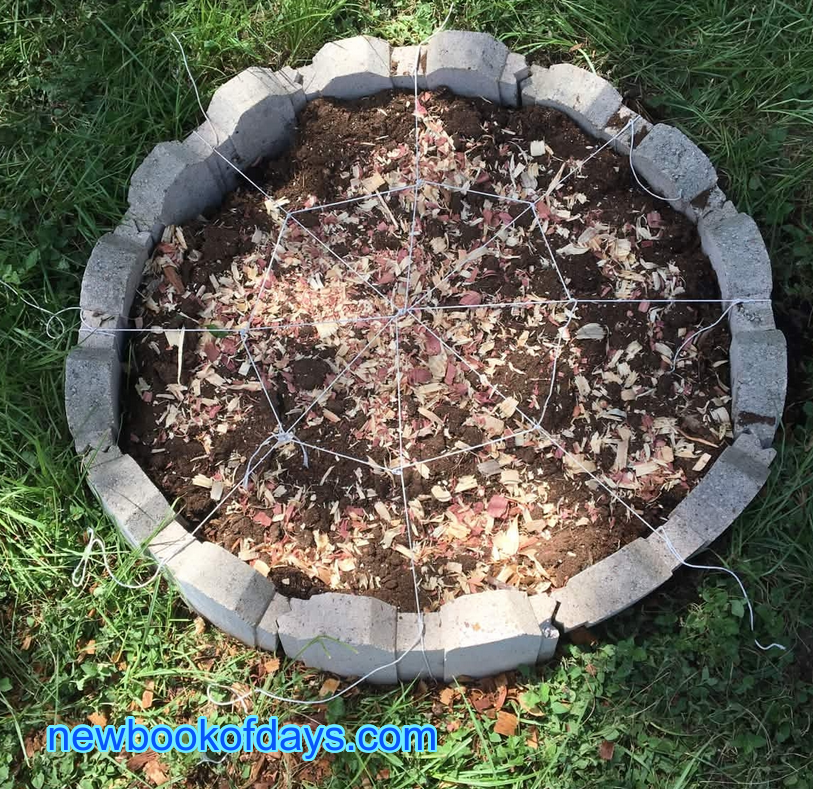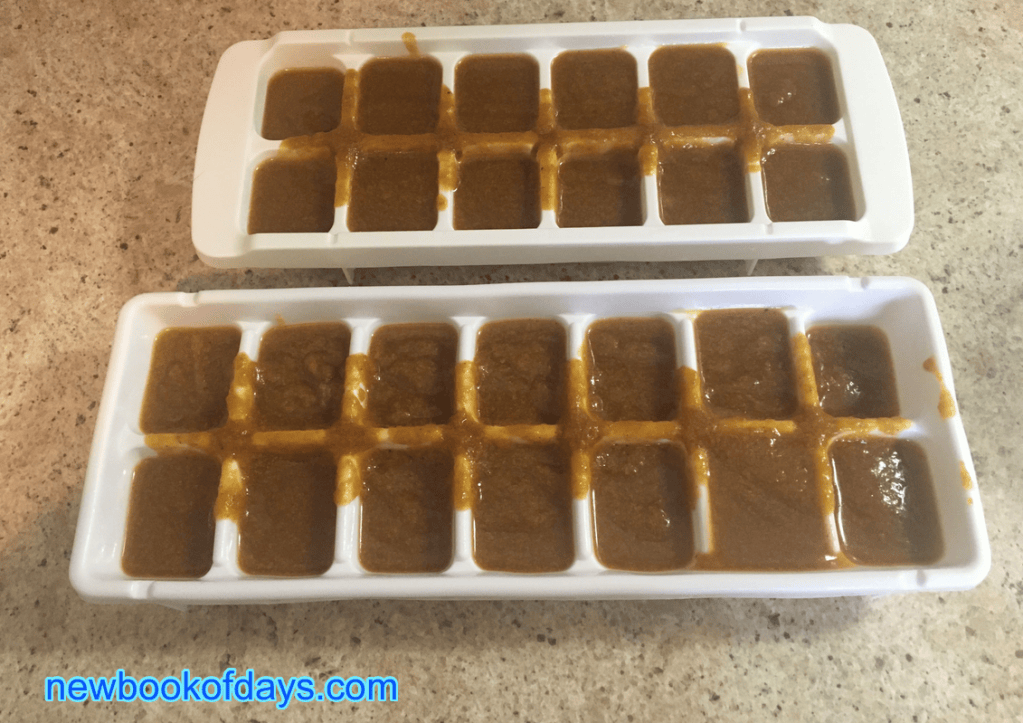
Reused pho broth container well cleaned and filled with water, then it headed into the freezer. Just something I hope will help keep stuff in our travel cooler cool on road trips. A hard-sided cooler, a few of these, perhaps some frozen water bottles or juice packs, and some food and hey, you don’t have to search for food in the middle of the night at your destination. It also will not puncture in transit and get cold water of dubious origins all over your food, unlike ice bought at gas stations.
New Book of Days
Assorted lifehacks and oddities. NO KINGS
recent posts
To see full images right-click them and click “Open Image In New Tab”
-

-

Edited on February 10, 2026 for better recipe performance! The other day I was microwaving various foods, and too tired to think straight. Next thing I knew I was microwaving bowl after bowl of stuff for two minutes each instead of putting it on one plate. But my microwave is pretty annoying anyway as it has a habit of burning or undercooking basically every time I use it! Here’s another way. Come to think of it this is pretty handy if you’re camping or something too
Warm Up Food Without Microwave
Tired of the microwave? Here’s my method of warming stuff up on the stove
Ingredients
- Food, whatever it is
Directions
- Put a skillet on the stove and turn it to Low, or about 2 to 2.5 on an electric stovetop, depending on your stove’s quirks. Whatever “Low” means at your place. Err on the side of too low.
- Get a lid that fits inside it
- Cram food in there. If it’s like pizza or muffins or something you might want to add a few drops of oil and/or water on the skillet. If it’s a heavy skillet, like cast iron or enamel or stainless steel, add 1 and a half tablespoons of water. Cover it with the lid. Doesn’t matter if it isn’t airtight or perfect or whatever so long as most of the food is covered.
- Wait 17 minutes. Serve.
-
Major inspirations include Sherlock Holmes, this Instructable by AngryRedhead, https://www.instructables.com/Researching-a-Research-Paper-Quickly-and-Effective/ (I looked at it to see where our processes differ – yes in some ways, no in others), You Can Do It! by Lauren Catuzzi Grandcolas, Girl Scout Badges & Signs by Girl Scouts of America (1980s version, referring to the process whereby badges are earned, which is really interesting), health challenges, and facing seemingly impossible challenges in my past. Digging for what information I need has not been a simple or straightforward process ever. It’s way more like fighting a battle or a war of attrition than scratching my head with a pencil and citing memorized facts about some long-forgotten scientific trivia. Collect your motivation before you begin.
I start with some problem that’s plaguing me. Something that’s been a colossal pain in the rear for a while and that I’ve tried to solve with the usual means but has not responded as I have wanted it to. Note that if you have had problems for a while, they tend to breed more problems, so I suggest starting anywhere. It’ll feed good feedback into all the other connected areas.
Where I like to look: every resource I can find. Libraries in my area, online libraries, bookstores, websites, Librarything. Bibliographies of books can sometimes help. My spirituality, too, I don’t discount that, but I think whatever yours is has to be up to you and your business only. People can be good sources of information or even sounding boards if you have trustworthy ones in your life. You can sometimes find internet forum threads that answer your questions too, seek them. That said, trial and error counts for a lot too. Whatever works after a long time of figuring out what doesn’t is something you might want to write down.
At this point questions might start to crop up. Write these down. They’re important and lead you down further avenues of research. Find a dead end? Research another question or research the same one again but differently. Speaking of writing stuff down, whatever you write down or type needs to be legible 20 years from now and understandable. You will not remember what you think will jog your memory unless you’re some kind of savant, so what’s the point in putting in all that work only to make yourself start back at square one if you ever need to look back at your research? Try to keep it in some semblance of order as you go also. Collect your evidence, but also condense everything you can so you don’t spend hours reading it unless you really, really have to. My way of writing this stuff down is to pretend I’m speaking to an antagonistic audience on an anonymous internet forum. Keep it short. Keep it simple. Get to the point. Get ready for the rotten tomatoes!
One asset you should strive to build here: scientific literacy. Understanding what a good source of information or evidence is versus what isn’t will stop you from wasting a lot of your time chasing so-called information that’s about as reliable as The Onion. I don’t believe scientific literacy is as simple as it seems either, and it’s something I’m working on. It’s important. Sometimes I thank my lucky stars and when figuring out whether a scientific paper’s conclusions are garbage since the researcher drew the incorrect conclusions from the evidence cited in that paper is generally part of those times, though I know I can always get better at it and when pursuing the truth, every effort to get better at finding it is worth it. Learning about lies, damn lies, and statistics, learning about correlation versus causation, accuracy versus precision, significant figures, bias, logic, mathematics, all that good stuff: oh my. Learn it. It’s worth taking night school classes in Science, even, if what I just said went straight over your head. Your life will change.
Another major asset: finishing the books you start. You will probably start to accumulate books that you think are worth reading. And to me, thanks to the Librarians franchise (which I suggest!) I see movies, TV shows and video games as “books,” they’re still stories and they count. They will not read themselves. It doesn’t matter if it takes you months or years but GET. THROUGH. THEM. You’ll get nowhere if you don’t. I speak from experience.
Now here’s where in my opinion the researchers for school or even paid researchers differ from people researching this stuff to solve problems in their own lives. The time and effort input. In college or at a workplace, you go, you do the thing, you submit the paper or pull the hours, you go home, job done. But the problem might be solved a la Mediocrates: “meh, good enough.” When it isn’t. In my experience the only way to really get familiar with a problem, familiar enough to destroy it, whip it, get it gone, or even to understand it much better and get significantly closer to solving or mitigating the problem is to sink a time investment of at least seven years. That long of trial and error, thorough research, getting all the help you can, living it, breathing it, mastering the intricacies. In my experience that long is really helpful for everything you care about too. Those years are the “git gud, scrub!!!” of research. I really, really, really suggest at least sinking a year or so into it.
If you do pull such a time investment, and care that much, the thorough but summarized notes you take can become a very valuable library in themselves. I like organizing such a thing much like I said in the Making The Most of Instructables post. Remember the two rules of computing: backup, and backup. Also pacing yourself and trusting yourself to pick up the work where you let it go in order to rest is very important so you don’t burn out. Why go through all this effort? Consider the long term implications.
-
So I’ve been on Instructables for years. Browsing, trying stuff, saving recipes you name it. However, it’s a weird site in that I’ve also spent months digging for information, finding unrelated stuff, finding things I needed years ago but that aren’t useful now etc. essentially it’s a pile of some of the best library books on Earth but organized such that it’s really hard to find what I am personally looking for. Here is what I’ve done with it, and with other sites that let me save pdfs and files of DIY how-tos, like Allrecipes or whatever:
Make a bunch of computer files labeled with fields of my interest, such as:
Solar technology
Rainwater technology
Vegan cooking
Makeup
and so on. Then, and I should have done this from the get-go but now I’m going to have to go back through and copypaste files into other folders, then delete the ones on the outside so as to have minimum file corruption (sigh): subdivide each folder. So then it would look like:
Solar Technology, with the file including: Solar Cookers, Passive Solar Heating, Passive Solar Cooling, Suncatchers, Fresnel Lenses, and whatever else I want to add
Rainwater Technology, file including: Rain Barrels, Drip Irrigation, Swales, Rainwater Harvesting, etc.
Vegan Cooking, file including: Breakfasts, Sides, Main Dishes, Snacks & Appetizers, Drinks, etc.
Makeup, file including: Eyes, Lips, Cheeks, Skincare, etc.
Subdividing each file further might be necessary over time.
Then I like to fill each up over time with pdfs and screenshots and images and such from the Internet. Instructables is a helpful place for all of these things. It’s important to sort whatever you search for by “all posts” so you find everything, not just what’s featured as that makes you miss a lot of cool stuff.
Another really helpful way to go about it is that if someone has made a super helpful Instructable before, check out their profile and bookmark it. Then go through and save pdfs from that person’s work.
Also: Make yourself a workspace of some sort. Right now, I have several of these: kitchen table, my desk, and surely the laptop and my planner count. I’ve gotten more stuff done with these things than without them. They’re kind of my artist’s studio, workshop, and makerspace all in one.
Here’s how I would organize literally all of the stuff from the Internet and Instructables and all libraries if I could wave a magic wand and change it up… (work in progress just like various other posts on this blog!)
SOLVING SPECIFIC PROBLEMS IN YOUR LIFE (unique to each person, my problems would probably not be yours)
FOOD: Farming, Cooking, Preserving
WATER: Rainwater Technology, Water Preservation, Plumbing
AIR: Purification, Forestry, Reduction of CO2 Footprint
SHELTER AND CLOTHING: Machine Sewing, Knitting, Masonry, Bricklaying, Construction
LOVE AND RELATIONSHIPS: Communication, Etiquette, Valentines, Gifts
BEAUTY AND HYGIENE: DIY Makeup, DIY Skincare
WOODCRAFTS: Whittling, Carpentry, Basketry, Coppicing
FORGE STUFF: Blacksmithing, Machining, Pottery, Glassblowing, Vehicle Repair, Repair
PARENTING: Pregnancy, Babies, Toddlers, Kids, Preteens, Teens, Adult Children
SELF-DEFENSE: Legal Stuff, Self-Defense Courses, First Aid, Safe Gun Ownership. Emphasis here on safe. If you aren’t willing to take the lessons on how to have a concealed carry, get a concealed carry license, clear background checks, regularly practice at a gun range, have and use a gun safe, and go through all sorts of classes on how to properly handle a weapon as well as treat any wounds caused by it, it’s more dangerous to both your family and yourself to have one than to not have one. Be honest with yourself; get whatever weapons you can handle instead if you need to (e.g. taser, pepper spray).
PETS: Dogs, Cats, Exotic Pets
HEALTH: Mental Health, Physical Health – note – this can get really involved, Exercise
RELIGION AND SPIRITUALITY: Your business
Cool thing here is that you can do whatever you want to organize this stuff for you. I hope you try Instructables and other sites like it. Library books and Instructables (and Allrecipes, and other places) and trying stuff from them IRL have made my life better in every single portion of it.This process is somewhat related to my research process, which I’ll explain at some point.
-
So my home neighborhood for the past few years has had my phone going off with warnings about escaped fugitives. I don’t know if it is from the local penitentiary or from people fleeing from cops. It came with the usual “stay in your home, report suspicious activity” stuff. Well, guess who’s been transferred to the local jail facility. Ghislaine Maxwell. https://www.kbtx.com/2026/01/04/release-names-not-ghislane-maxwell-protest-bryan-federal-prison-camp/
I suggest everyone here buys guns and not let their children go outside for a while. Til she’s either somehow killed or transferred to a maximum security prison. I also suggest everyone seriously consider who has been complacent about this current so-called President, his enablers, and his cherished Epstein Files, and who hasn’t bothered to vote in the past few elections. Hmm, hm. -

Differs from the usual Mediterranean and Middle Eastern chopped salads in the addition of raw garlic and if available, avocado at the right freshness.
Israeli Salad
I’ve had so many different variations on this I can’t remember them all. Use whatever vegetables are in season for you or whichever garden salad-type ones you like. Just finely dice them. Goes with breakfast, lunch, and dinner anytime, anywhere, anyplace! © https://www.newbookofdays.com 2026Ingredients
- ½ cup or so of cherry or grape tomatoes, washed and quartered, or ½ a tomato, diced (about ½ cup)
- ½ a cucumber, diced (about 1 cup)
- 2 tsp lemon juice, fresh or bottled, fresh greatly preferred
- Pinch of salt, I like sea salt
- 1 tbsp extra virgin olive oil
- Optional: 1 tsp minced fresh washed parsley, celery leaf, green onions, or spearmint
- Optional: 1 minced or pressed fresh garlic clove
- Optional but highly recommended: ½ an avocado, perfectly fresh, diced
- Optional: Other seasonal ingredients like some bell pepper, some celery, carrot, Romaine lettuce, mushrooms, spinach, etc. whatever it is, slice it and dice it til it will hold together in the salad so you can eat it easily with a spoon
Directions
- Wash and dry everything and dice, mince and slice it. Throw it in a bowl. Throw the tomato pulp and seeds in there too, that’s where a lot of the flavor is
- Put a pinch of salt on top
- Put the lemon juice on it, ideally squeezing directly from the lemon through your cupped fingers to catch any seeds
- Put the olive oil on it
- Mix with a spoon and serve
-
This stuff is fast and easy to make. It’s healthy, too.
Trail Mix
Trail Mix 1

For something this simple it’s pretty good. The recipe is vegan if you use vegan semisweet chocolate chips
Ingredients
- Handful of or 1 part semisweet chocolate chips
- Handful of or 1 part raisins
- Handful of or 1 part roasted salted peanuts
- Handful of or 1 part plain cereal O’s
- Handful of or 1 part roasted mixed nuts
Directions
- Combine equal parts of everything in a resealable container of some sort, such as a plastic bag, plastic container, or something, and shake
- Serve
-
If you haven’t worked in a commercial kitchen then you probably haven’t heard of the kitchen hierarchy so I’ll tell you. It goes like this, more or less: dishwasher, prep cook, saucier and salad/garnish cooks (in fancy kitchens), patissier/dessert chef, line cooks (including grill cooks, fry cooks etc.) and head chef. Some kitchens also have intermediary chefs between line cooks and head chef. There is a reason for the hierarchy. You start at the bottom and work your way up because the tasks at the bottom are actually the most important. Get those wrong and the whole kitchen falls apart. Here’s why I’m mentioning this: most home cooks do the dishwashing and every kind of cooking except for prep cook work. It kind of relates to meal prepping but is a little different. You do it on top of regular cooking.
In defense of doing prep cook work: it’s super labor intensive, so not always helpful at home. But if you can manage it, it can save you a lot of money and prevent a lot of food waste. Here’s how: sometimes, as close as possible to when you brought home the food from the store, get in the kitchen, prep it, stuff it into food storage containers and refrigerate or freeze it. Only stuff you and your family enjoy eating. You can probably see how these, for example, would help a lot, because what is already prepared is way more likely to get eaten before it goes bad:
VEGETABLES
Crudites like sliced cucumber, broccoli, bell peppers, cherry tomatoes, celery sticks (put this vertically in about an inch of water at the base)
Meal ingredients like diced or thinly sliced sweet onions (in my experience these last a whiiile, like more than a week)
FRUITS
Sliced or diced papaya, mango, pineapple, orange wedges, peaches, stuff like that
Same but sprinkled with lemon or pineapple juice to prevent browning: apple slices, pear slices
Sliced hulled strawberries or just about anything else sprinkled heavily with sugar between each layer to add to cereal, pancakes etc. later
Halved lemons, which you can use by squeezing one over one cupped hand to catch the seeds but let the juice go through, directly onto a salad instead of vinegar, or to add good flavor to steamed vegetables with olive oil or something
MEATS AND SEAFOOD
Chicken, hamburger patties, turkey, etc. cut into parts and portioned into individual servings
FREEZE THIS
Lasts so much longer.
Sliced bread – just toast directly out of the freezer
Bagels – same
Berries, hulled or plain, maybe frozen on several stacked plates in there first so they don’t stick together
Juice, perhaps in ice cube trays or popsicle molds
NOT WORTH FREEZING IF YOU CAN AVOID IT
Butter. Some say it doesn’t affect the flavor, but I think it does, and it lasts a long time in the fridge anyway, if you buy salted. Why wouldn’t you buy salted, anyway?
Pie crust. Ruins the texture
SOME NOTES
You can buy a lot of stuff like this at the grocery store. Pre-prepped things there can be a serious godsend. I’ve also had some luck at coffee shops and donut shops. Fear not the takeout and the portioning/fridging/freezing thereof, as it’s a literal lifesaver if you’re low on mobility, fresh out of surgery or whatever.
Writing down what you will make when can really help, especially if you need to thaw something the day before and you’re just finding out the day of. I practically live out of my day planner. In fact, I’ve made it myself out of several notebooks and find it really helpful for everything. Especially since my memory’s pretty garbage.
MY RECIPE FILES
I like to save these as folders with many sub-folders on my laptop. It’s been extremely handy finding printable recipes for food and other things then squirreling them away in the hoard. How that relates to this is I like to have recipes saved for Leftover Foods (by food), also Make Ahead and Refrigerate, and Make Ahead And Freeze. This really, really helps for any seasonal occasion so I don’t have to wear myself out cooking all the things in like one day. I also use the two rules of computing: backup, and backup. One in the “cloud” aka paid for storage online, and one on a flashdrive. And finally, in the kitchen whenever something really works there’s a plastic index card keeper which contains blank and filled out index cards. While my recipe cools or whatever I write down what worked there. I have to sort that one at some point with a hole punch, and some rings to sort it by appetizers, most commonly used stuff, sides, mains, etc.. -

You might already know about this one, but this is what my family does instead of using plastic wrap. As you can see, we top plates with lids, and pots and bowls with plates. We don’t use beeswrap, or anything. It’s clunky, hard to maneuver around in a fridge, and does not look good but we never need to buy plastic wrap or maintain beeswrap. So you technically don’t need to buy plastic wrap this holiday season.
-

This isn’t a tutorial for a friendship bracelet, just an awareness post for you guys that yellow is now the symbol of the No Kings movement. To me it’s more than just a symbol of protest against authoritarian regimes, it is to hopefully show kids that someone cares about their well being enough to risk their personal safety for them. And also to show kids that courage is another path they can take.
On another note it’s pretty cool that someone actually remembered the Hong Kongers. They’re heroes.